Best AI Tools in 2026: 50+ AI Software Reviewed, Compared & Ranked
Discover the best AI tools for writing, coding, image generation, video creation, research, productivity, automation, and business. Every recommendation is based on hands-on testing by the Vorexen editorial team.
Quick Answer
If you’re looking for one AI platform that excels across the widest range of tasks, ChatGPT remains our top recommendation for 2026. It combines advanced reasoning, high-quality writing, coding assistance, image generation, deep research, and productivity features in a single platform.
Read our complete ChatGPT Review to explore features, pricing, comparisons, and our full hands-on evaluation.
Why Read This Guide?
Artificial intelligence has evolved from a niche technology into an essential part of modern work. Whether you’re creating content, writing software, conducting research, designing graphics, editing videos, automating business processes, or improving personal productivity, the right AI tool can dramatically increase both speed and quality.
The challenge is no longer finding an AI tool—it is choosing the right one. Hundreds of platforms compete for attention, yet only a small number consistently deliver outstanding performance in real-world use.
To simplify your decision, the Vorexen editorial team tested leading AI software across multiple categories, comparing usability, performance, pricing, innovation, integrations, security, and long-term value.
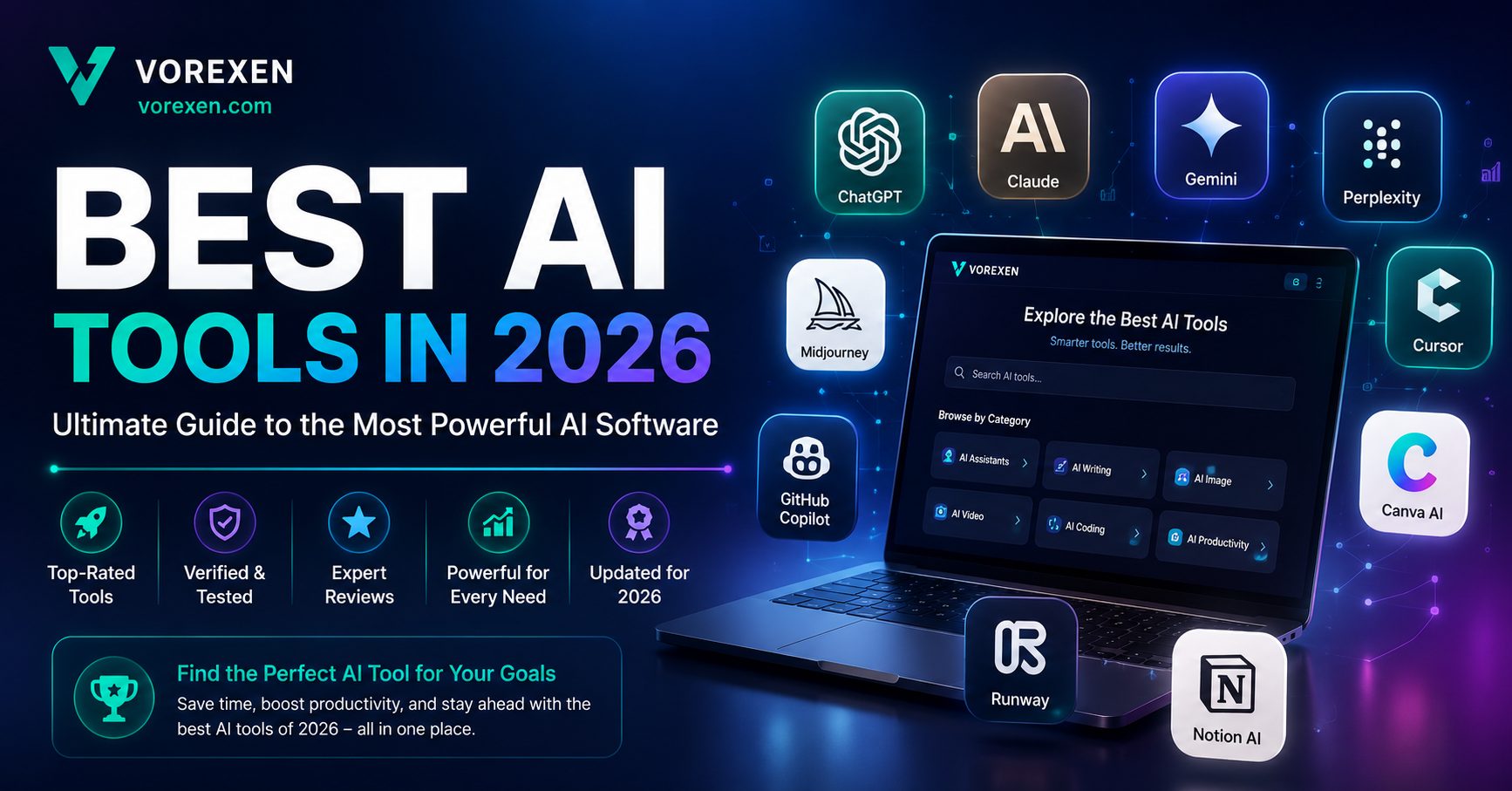
Top AI Platforms Covered in This Guide
Looking for the Right AI Tool?
Continue reading to compare more than 50 of the best AI tools across every major category, including AI assistants, writing tools, coding platforms, image generators, video creators, research tools, productivity software, and automation solutions.
Continue Reading ↓Key Takeaways
If you only have a few minutes, these are the most important findings from our research and testing. The recommendations below summarize the AI platforms that consistently delivered the best results across different use cases.
🏆 Best Overall AI Assistant
ChatGPT offers the best balance of intelligence, usability, multimodal capabilities, and value.
📄 Best for Long Documents
Claude AI delivers exceptional reasoning and document analysis with one of the largest context windows available.
🔍 Best AI Research Tool
Perplexity AI combines conversational AI with reliable source citations, making it ideal for research and fact-checking.
💻 Best AI Coding Tool
Cursor helps developers write, debug, refactor, and understand code more efficiently.
✍️ Best AI Writing Tool
Jasper AI remains one of the strongest platforms for marketing teams and professional content creators.
🎨 Best AI Image Generator
Midjourney continues to produce some of the highest-quality AI-generated artwork available.
Editor’s Choice for 2026
During our evaluation, ChatGPT consistently ranked first thanks to its excellent reasoning, writing quality, coding support, image generation, deep research capabilities, and continuously expanding ecosystem.
If you only plan to use one AI platform, we recommend starting with ChatGPT before exploring more specialized solutions like Cursor, Midjourney, or Perplexity AI.
Quick Facts
50+
AI tools reviewed
10+
Categories compared
2026
Latest evaluations
100%
Independent methodology
Why Trust Vorexen?
Choosing AI software can be difficult because many reviews simply repeat vendor claims. At Vorexen, every recommendation is based on a consistent review methodology that focuses on real-world usability rather than promotional material.
Our editorial team evaluates each platform using standardized criteria, including AI capabilities, response quality, usability, pricing, integrations, security, reliability, and overall value. This approach allows us to compare AI tools fairly across different categories.
Whenever significant updates are released, our reviews are revised to reflect new models, pricing changes, and feature improvements so readers always have access to current information.
What Makes an AI Tool Worth Recommending?
- Delivers consistently accurate results.
- Provides an intuitive user experience.
- Offers competitive pricing and good overall value.
- Receives regular feature updates and model improvements.
- Integrates with popular productivity and business tools.
- Maintains strong privacy and security standards.
- Supports both beginners and professional users.
What’s Next?
In the next section, we’ll explain exactly how we tested each AI platform, the scoring methodology we used, and how different AI categories compare before diving into our detailed reviews.
Continue to Testing Methodology →Table of Contents
Use the table of contents below to quickly navigate to the section that matches your needs.
How to Use This Guide
Whether you’re completely new to artificial intelligence or already using AI every day, this guide is designed to help you identify the right platform based on your goals, experience level, and budget.
🚀 If You’re New to AI
- Start with the Quick Answer section.
- Read our Editor’s Choice recommendations.
- Compare the main AI categories.
- Choose one platform before trying multiple tools.
⚡ If You’re an Experienced User
- Jump directly to your preferred category.
- Compare pricing and feature differences.
- Explore advanced review articles.
- Use our comparison guides before upgrading.
Who Is This Guide For?
Artificial intelligence is no longer limited to software engineers. Today’s AI platforms are used by professionals across nearly every industry.
Professionals
- Content creators
- SEO specialists
- Marketing teams
- Business owners
- Developers
- Researchers
Students & Individuals
- University students
- Teachers
- Freelancers
- Designers
- Entrepreneurs
- Everyday AI users
Explore Our AI Reviews
Looking for an in-depth review instead of a general comparison? Browse our most popular AI software reviews below.
Recommended Reading Path
Step 1
Understand our testing methodology.
Step 2
Explore the AI categories that match your needs.
Step 3
Read the detailed reviews for your favorite tools.
Step 4
Compare pricing, features, and strengths before making a decision.
Popular AI Categories
Ready to See How We Ranked the Best AI Tools?
The next section explains the exact methodology used by the Vorexen editorial team, including our testing process, scoring system, and evaluation criteria.
Continue to Part 2 →The State of Artificial Intelligence in 2026
Artificial intelligence has become one of the fastest-growing technologies in history. What started as simple AI chatbots has evolved into a complete ecosystem of intelligent software capable of writing articles, generating images and videos, developing software, analyzing large datasets, automating workflows, conducting research, and supporting business decision-making.
Today, AI tools are used by millions of professionals, students, creators, developers, researchers, marketers, and businesses around the world. New models are released frequently, making it increasingly difficult to determine which platforms provide genuine value and which simply follow industry trends.
Instead of relying on marketing claims, users need independent evaluations that compare AI platforms using consistent testing criteria. That’s exactly the purpose of this guide.
Why AI Tools Matter More Than Ever
🚀 Higher Productivity
AI automates repetitive work, allowing professionals to complete tasks faster while maintaining quality.
💰 Better Return on Investment
The right AI platform can replace multiple standalone applications, reducing software costs and improving operational efficiency.
🎯 Improved Decision-Making
Modern AI assistants analyze information, summarize complex topics, and generate actionable insights in seconds.
🌍 Accessibility
AI makes advanced capabilities available to individuals and small businesses that previously required specialized teams.
What Makes an Excellent AI Tool?
Not every AI platform deserves a recommendation. Throughout this guide, we focus on software that consistently performs well in real-world scenarios rather than simply offering a long list of features.
- Advanced AI capabilities
- Accurate and reliable responses
- Fast performance
- User-friendly interface
- Regular feature updates
- Fair pricing and strong value
- Reliable integrations
- Security and privacy protections
- Active development roadmap
- Excellent overall user experience
What You’ll Compare in This Guide
Our recommendations cover every major category of AI software, helping you choose the right platform based on your specific needs.
🤖 AI Assistants
General-purpose AI for work and everyday tasks.
✍️ AI Writing
Content creation, SEO, copywriting, and editing.
💻 AI Coding
Programming, debugging, testing, and code generation.
🎨 AI Image
Illustrations, graphics, branding, and design.
🎬 AI Video
Video creation, editing, and animation.
📊 Productivity
Automation, organization, collaboration, and business workflows.
Explore Popular AI Reviews Before You Continue
If you’re already interested in a specific platform, you can jump directly to one of our detailed reviews before exploring the complete rankings.
Our Promise to Readers
Every recommendation in this guide is based on independent research, hands-on testing, and standardized evaluation criteria. We continuously update our reviews to reflect major model releases, feature improvements, pricing changes, and emerging competitors so that our rankings remain accurate and relevant.
Next: How We Tested Every AI Tool
Before comparing the best AI platforms, it’s important to understand how we evaluated them. In the next section, you’ll learn about our testing methodology, scoring framework, and the criteria used to rank every tool featured in this guide.
Continue to Part 2 →How We Tested the Best AI Tools
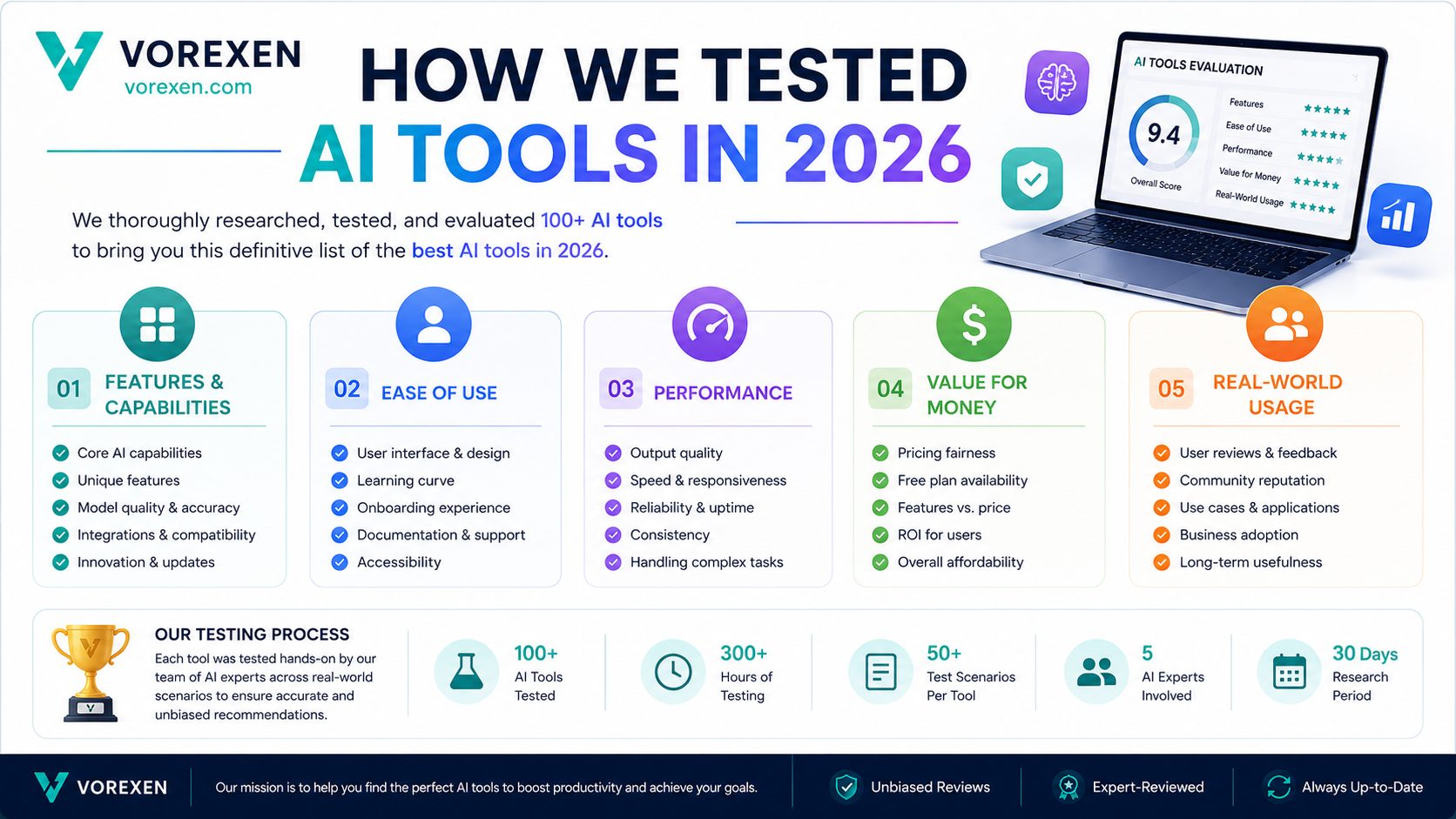
Choosing the best AI software requires more than comparing feature lists or marketing pages. Every platform claims to be faster, smarter, or more powerful than its competitors, but real-world performance often tells a different story.
To create this guide, the Vorexen editorial team evaluated leading AI tools using a standardized testing framework. Rather than relying on vendor claims, we focused on practical use cases that reflect how people actually work with AI every day.
Each platform was tested using identical evaluation criteria whenever possible, allowing us to compare AI assistants, writing tools, coding platforms, image generators, research tools, productivity software, and automation solutions as fairly as possible.
Our Testing Principles
Real-World Usage
Every recommendation is based on practical tasks rather than synthetic benchmark scores.
Independent Evaluation
Rankings are created independently and are not influenced by software vendors.
Consistent Criteria
The same evaluation framework is applied across all tools whenever applicable.
Continuous Updates
Reviews are revised whenever major models, pricing, or core features change.
What We Tested
Each AI platform was evaluated across multiple real-world workflows depending on its intended purpose.
✍️ Writing
- Blog articles
- SEO content
- Marketing copy
- Email writing
- Editing
💻 Coding
- Code generation
- Debugging
- Code explanation
- Refactoring
- Documentation
🔍 Research
- Fact gathering
- Source quality
- Summarization
- Reasoning
- Accuracy
🎨 Creativity
- Image creation
- Visual quality
- Prompt following
- Style consistency
- Editing
⚙ Productivity
- Task management
- Automation
- Collaboration
- Document handling
- Integrations
📈 Business
- Scalability
- Team features
- Security
- Administration
- Enterprise readiness
Testing Workflow
- Select the latest stable version of each AI platform.
- Create standardized prompts and practical workflows.
- Evaluate output quality across multiple categories.
- Measure usability, speed, consistency, and reliability.
- Review pricing, integrations, and ecosystem support.
- Compare strengths, weaknesses, and overall value.
- Update rankings whenever significant platform changes occur.
Why Our Methodology Matters
Many comparison articles rely heavily on feature lists or promotional material. Our methodology prioritizes hands-on testing and consistent evaluation criteria so that readers can compare platforms based on practical performance rather than marketing claims.
Explore Related Reviews
Next Step
Now that you’ve seen how we evaluate AI platforms, the next section explains our scoring model, rating system, and the criteria used to rank every tool featured in this guide.
Continue to Rating Methodology →Our AI Tool Rating Methodology
Every AI platform featured in this guide receives an overall rating based on a weighted scoring framework developed by the Vorexen editorial team. Rather than assigning scores subjectively, we evaluate each product across multiple categories that reflect real-world performance, usability, and long-term value.
Each criterion is scored individually before being combined into a final overall rating. This methodology allows readers to compare AI tools consistently across different categories, including AI assistants, writing tools, coding platforms, image generators, productivity software, and automation solutions.
Scoring Categories
| Evaluation Criteria | Weight | Purpose |
|---|---|---|
| AI Features & Capabilities | 30% | Measures the breadth, quality, and usefulness of core AI features. |
| Performance & Accuracy | 20% | Evaluates response quality, consistency, reasoning, and reliability. |
| Ease of Use | 15% | Assesses interface design, learning curve, and overall user experience. |
| Pricing & Value | 15% | Compares subscription plans, free features, and overall value for money. |
| Integrations | 10% | Reviews compatibility with third-party tools and productivity platforms. |
| Security & Privacy | 5% | Considers privacy controls, data handling, and enterprise readiness. |
| Support & Community | 5% | Evaluates documentation, customer support, and ecosystem maturity. |
Overall Rating Scale
Example Rating Breakdown
How We Keep Our Rankings Updated
Artificial intelligence evolves rapidly. New foundation models, pricing updates, integrations, and feature releases can significantly change the competitive landscape. For that reason, Vorexen regularly reviews and updates rankings to ensure they reflect the latest publicly available versions of each platform.
We Update For
- Major AI model releases
- Pricing changes
- New premium features
- Enterprise improvements
- Integration updates
We Reevaluate
- Performance
- Accuracy
- User experience
- Overall value
- Competitive positioning
Why a Standardized Rating System Matters
Using a consistent evaluation framework helps eliminate bias and allows readers to compare AI platforms on equal terms. Whether you’re choosing an AI assistant, writing platform, coding tool, or research solution, every product is assessed using the same methodology whenever applicable.
Continue Your Research
Next: AI Tool Categories
In the next section, we’ll explore the major categories of AI software, explain how they differ, and help you identify which type of AI tool best fits your workflow.
Continue to AI Categories →Understanding AI Tool Categories
Artificial intelligence is no longer limited to chatbots. Modern AI platforms are designed for highly specialized tasks, ranging from content creation and software development to marketing, research, automation, education, and business operations. Understanding these categories makes it much easier to choose the right AI solution for your specific workflow.
Rather than searching for a single tool that claims to do everything, most professionals achieve better results by combining a general-purpose AI assistant with one or two specialized platforms.
The Major AI Categories in 2026
🤖 AI Assistants
General-purpose AI platforms capable of writing, reasoning, coding, research, brainstorming, and everyday productivity.
✍️ AI Writing
Designed for blog writing, SEO content, marketing copy, email campaigns, and editing.
Examples: Jasper AI, Writesonic, Copy.ai
💻 AI Coding
Developer-focused assistants that generate code, debug applications, explain functions, and accelerate software development.
Examples: Cursor, GitHub Copilot
🎨 AI Image Generation
Create illustrations, concept art, product images, social media graphics, and marketing visuals using natural language prompts.
Examples: Midjourney, ChatGPT Image Generation
🎬 AI Video
Generate videos, animations, avatars, and professional visual content from text, images, or existing footage.
Examples: Runway
🔊 AI Audio & Voice
Produce realistic voiceovers, podcasts, speech synthesis, and multilingual audio content.
Examples: ElevenLabs
🔍 AI Research
Search, summarize, verify information, and provide cited answers for academic and professional research.
Examples: Perplexity AI
📈 Productivity & Automation
Automate repetitive tasks, manage projects, organize information, and improve collaboration.
Examples: Notion AI, Microsoft Copilot
Which AI Category Is Right for You?
| Your Goal | Recommended Category |
|---|---|
| General AI assistance | AI Assistants |
| Content creation & SEO | AI Writing |
| Software development | AI Coding |
| Graphic design | AI Image Generation |
| Video production | AI Video |
| Research & fact-checking | AI Research |
| Workflow optimization | Productivity & Automation |
Our Recommendation
If you’re just getting started, begin with a powerful AI assistant such as ChatGPT or Claude AI. Once you identify your primary workflow, add a specialized tool—such as Cursor for coding, Jasper AI for marketing content, or Midjourney for image generation—to create a more effective AI toolkit.
Next: Explore the Best AI Categories
Now that you understand the different types of AI software, let’s look at the best tools in each category and see which platforms earned our highest ratings.
Continue to Category Rankings →Explore the Best AI Tool Categories
Artificial intelligence software serves many different purposes. Rather than searching through hundreds of individual products, start with the category that best matches your goals. Each section below highlights our top recommendations and links to detailed reviews.
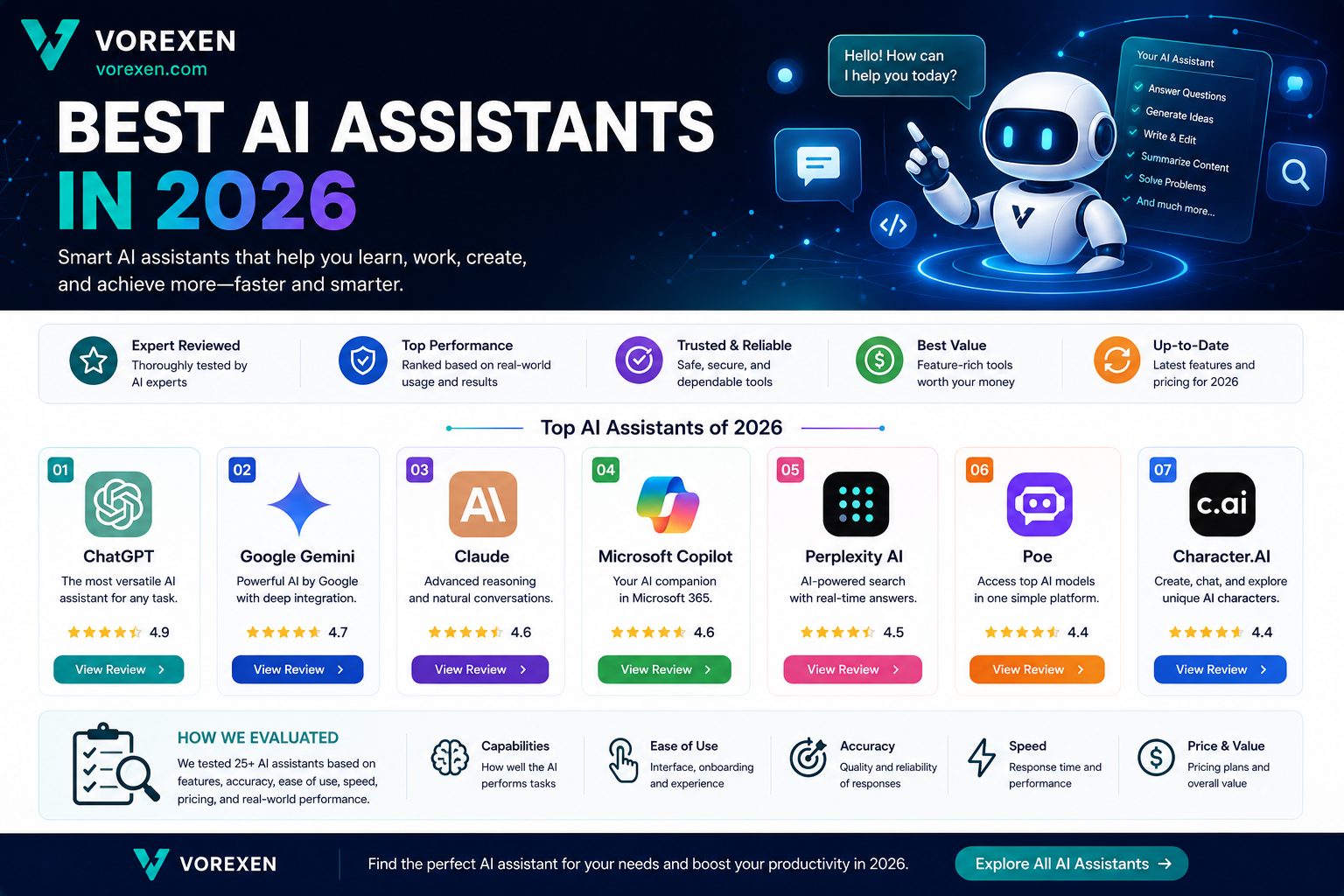
🤖 Best AI Assistants
General-purpose AI assistants for writing, reasoning, coding, brainstorming, research, and everyday productivity.
- 🏆 Editor’s Pick: ChatGPT
- Top Alternatives: Claude, Gemini, Perplexity
- Best For: Everyday AI
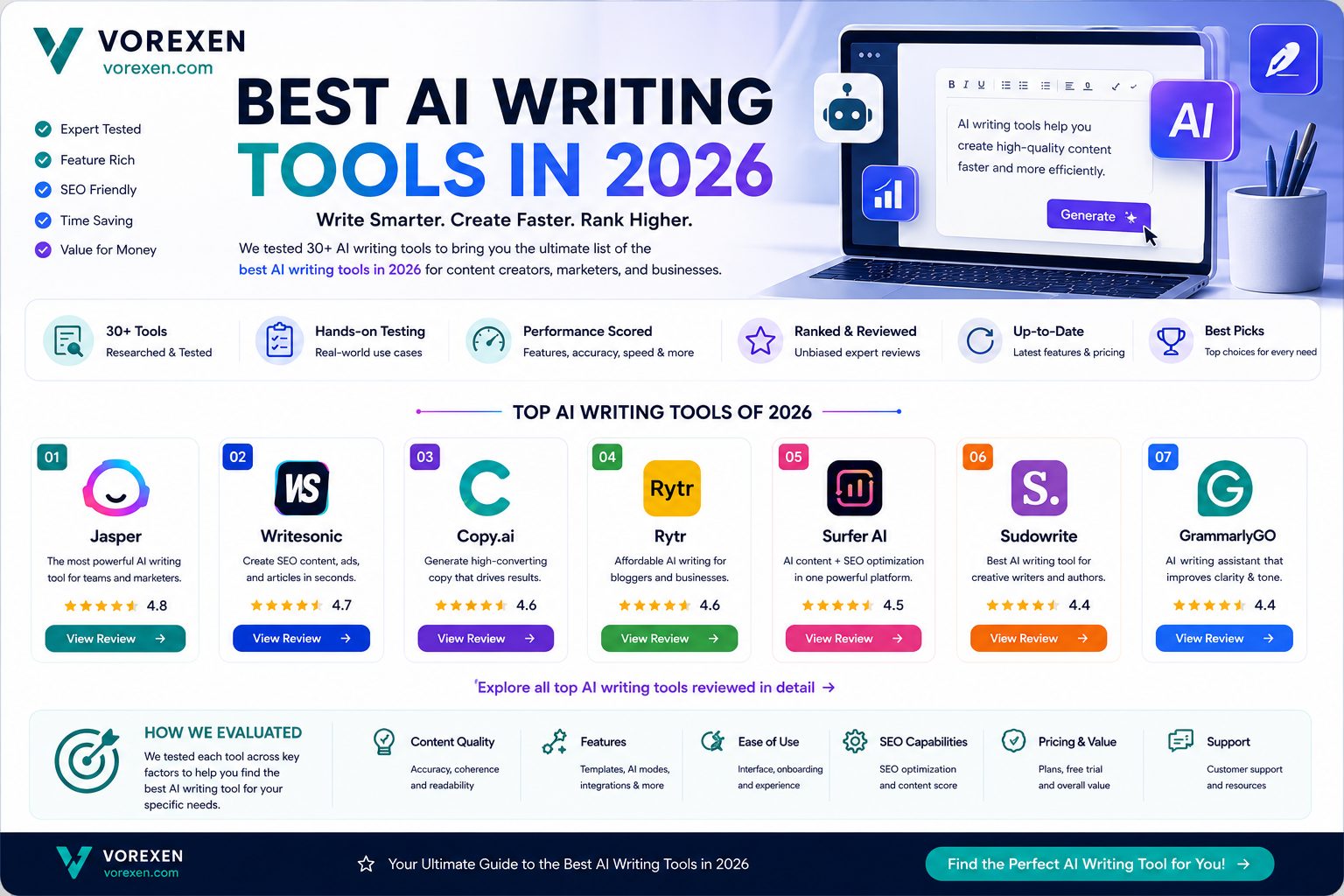
✍️ Best AI Writing Tools
Create SEO articles, marketing copy, blog posts, emails, and professional content faster with AI.
- 🏆 Editor’s Pick: Jasper AI
- Top Alternatives: Writesonic, Copy.ai, Rytr
- Best For: Content Marketing
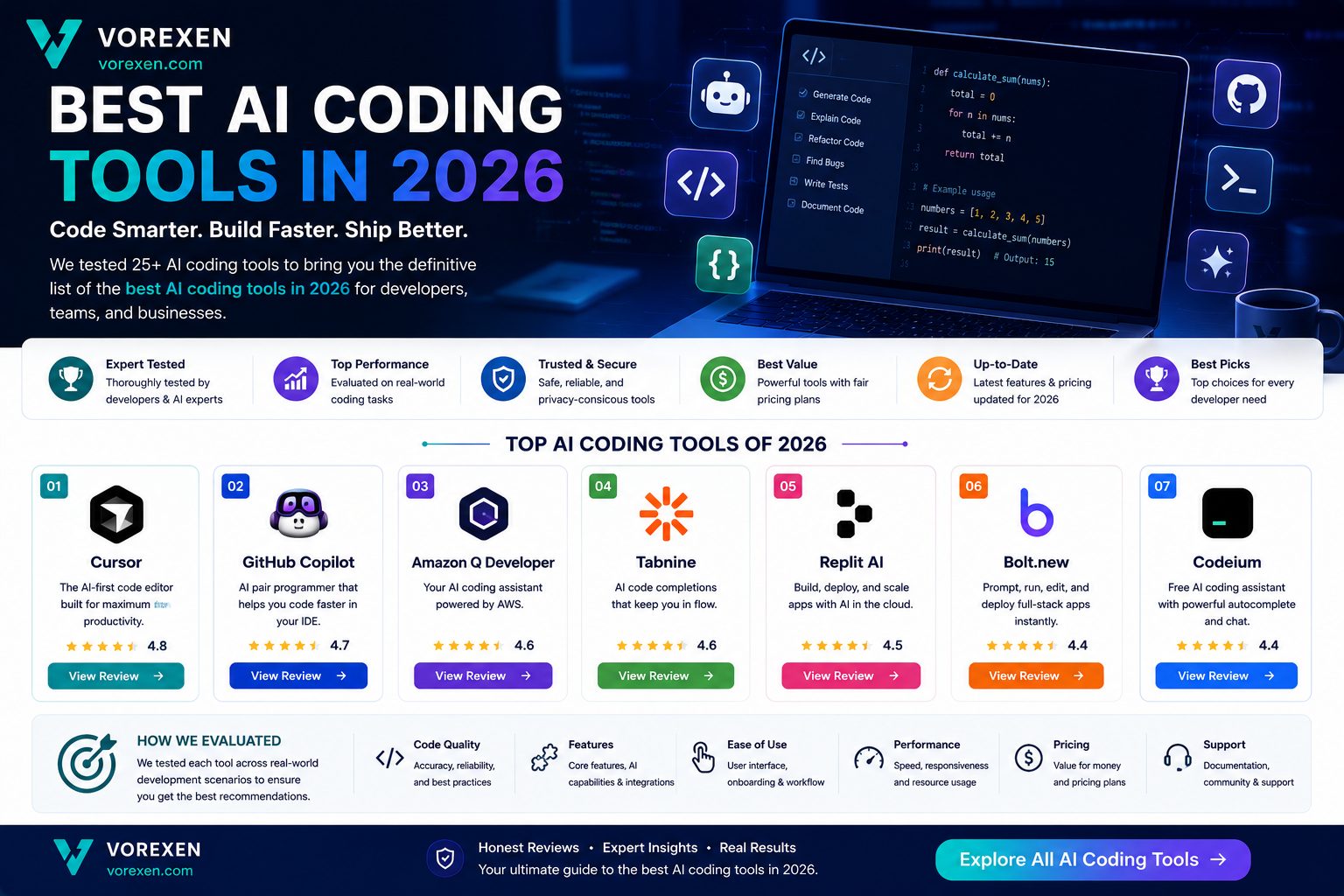
💻 Best AI Coding Tools
Accelerate software development with AI-powered coding assistants, debugging tools, and code generation.
- 🏆 Editor’s Pick: Cursor
- Top Alternatives: GitHub Copilot
- Best For: Developers
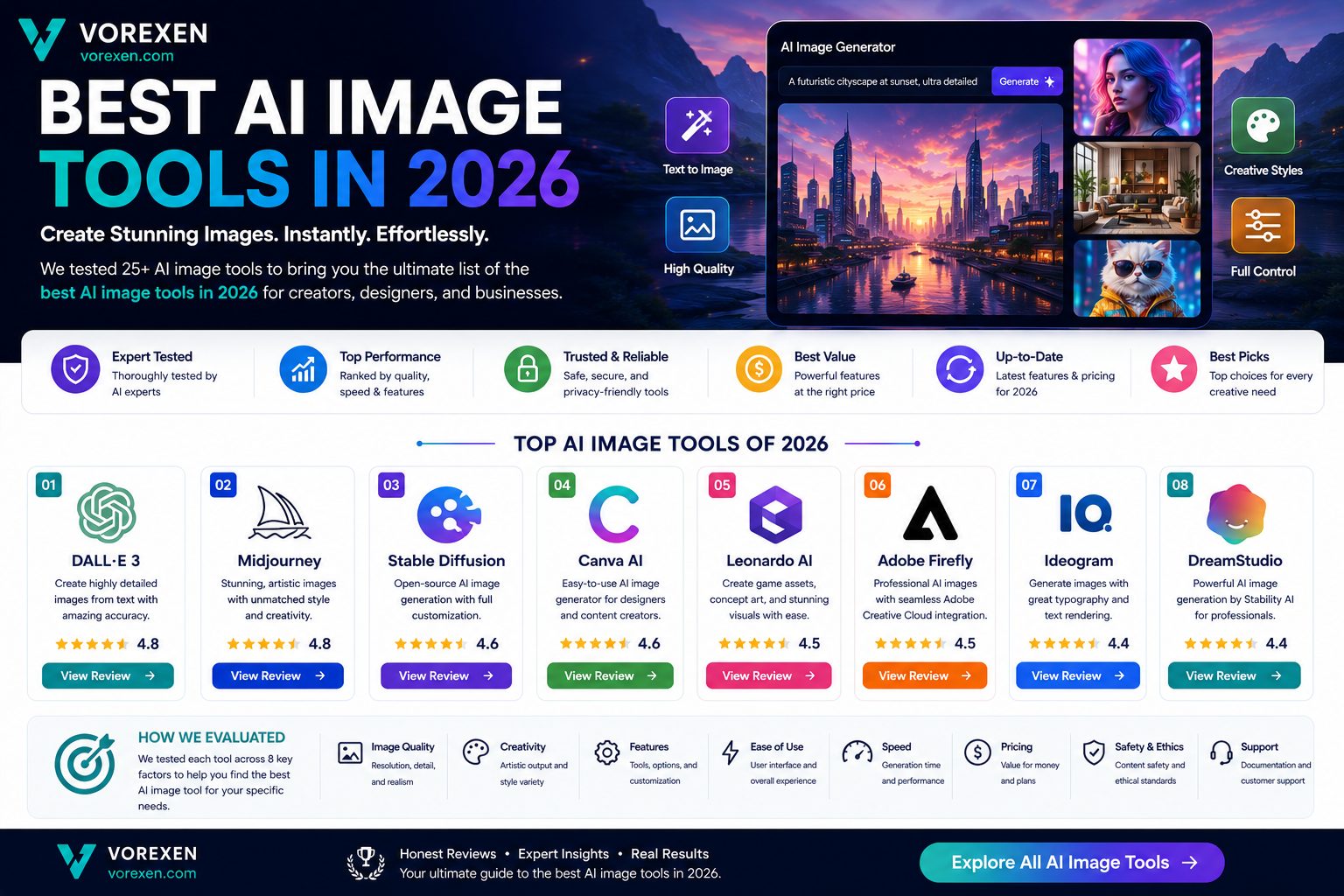
🎨 Best AI Image Generators
Generate illustrations, product images, concept art, logos, and marketing graphics using AI.
- 🏆 Editor’s Pick: Midjourney
- Top Alternatives: ChatGPT Images
- Best For: Designers
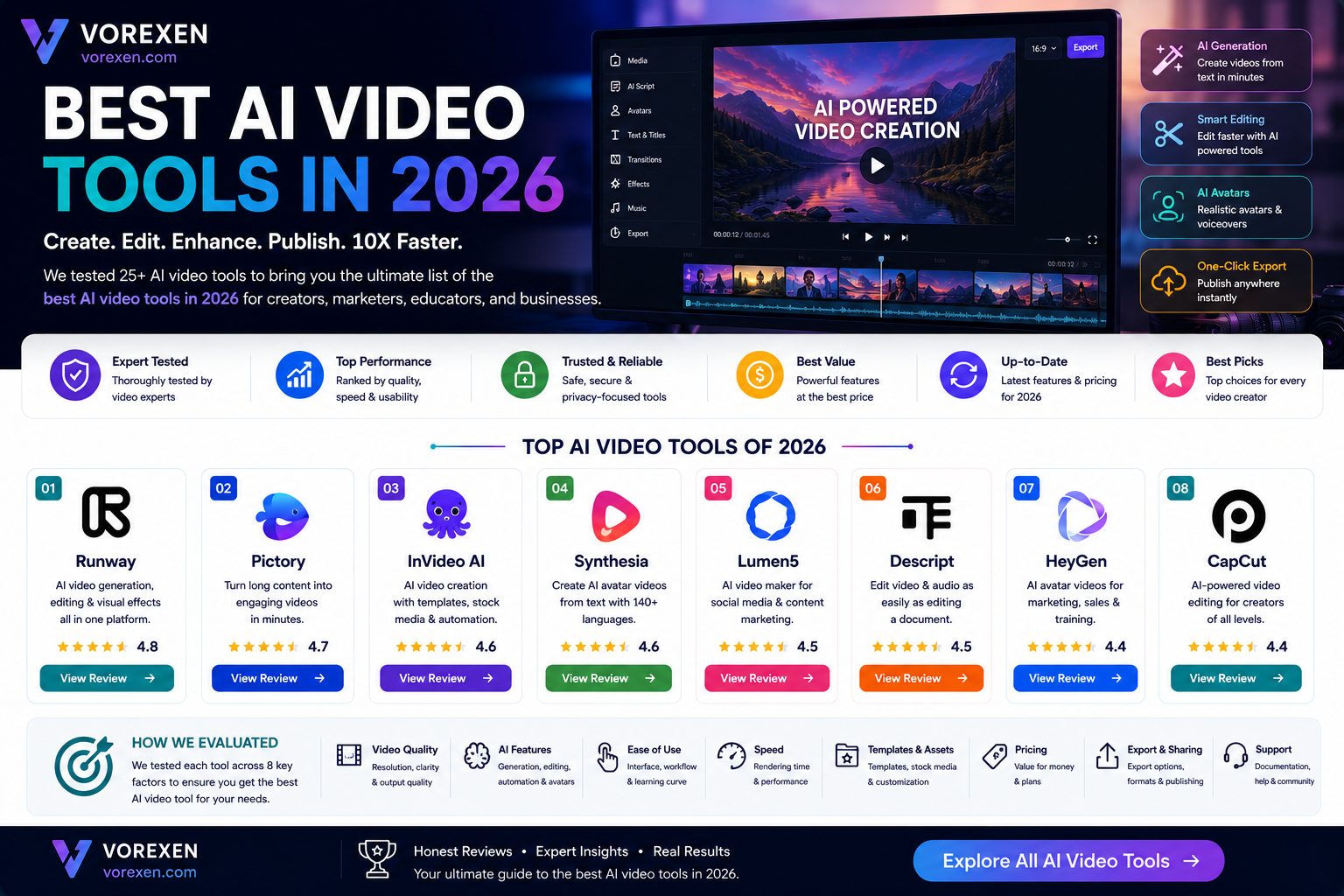
🎬 Best AI Video Tools
Create AI videos, animations, marketing clips, avatars, and presentations with minimal effort.
- 🏆 Editor’s Pick: Runway
- Best For: Video Creators
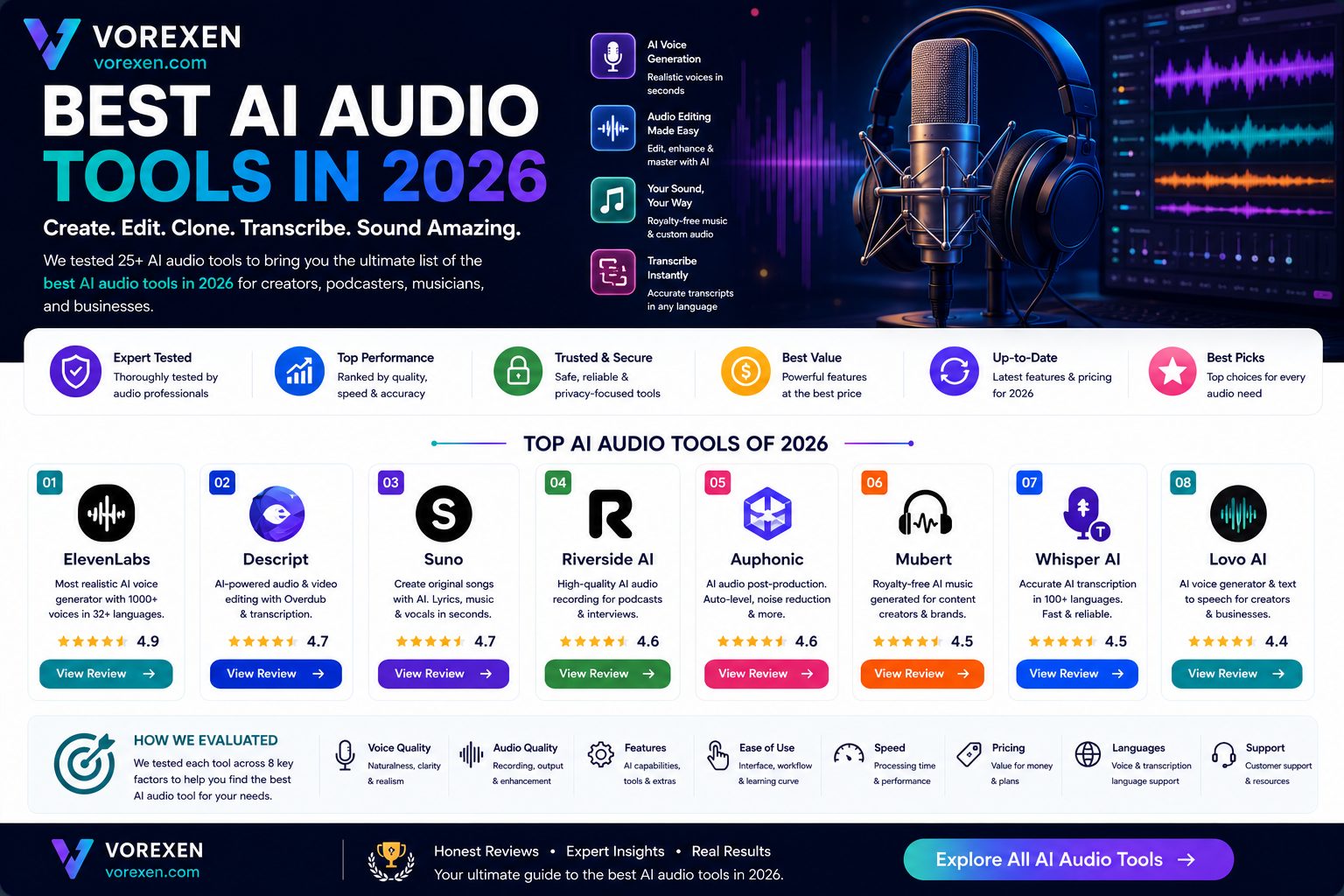
🎙️ Best AI Audio & Voice Tools
Generate natural voiceovers, podcasts, multilingual speech, and realistic audio using AI.
- 🏆 Editor’s Pick: ElevenLabs
- Best For: Voice Generation

🔍 Best AI Research Tools
Search the web intelligently, summarize complex topics, verify facts, and discover reliable sources.
- 🏆 Editor’s Pick: Perplexity AI
- Best For: Research
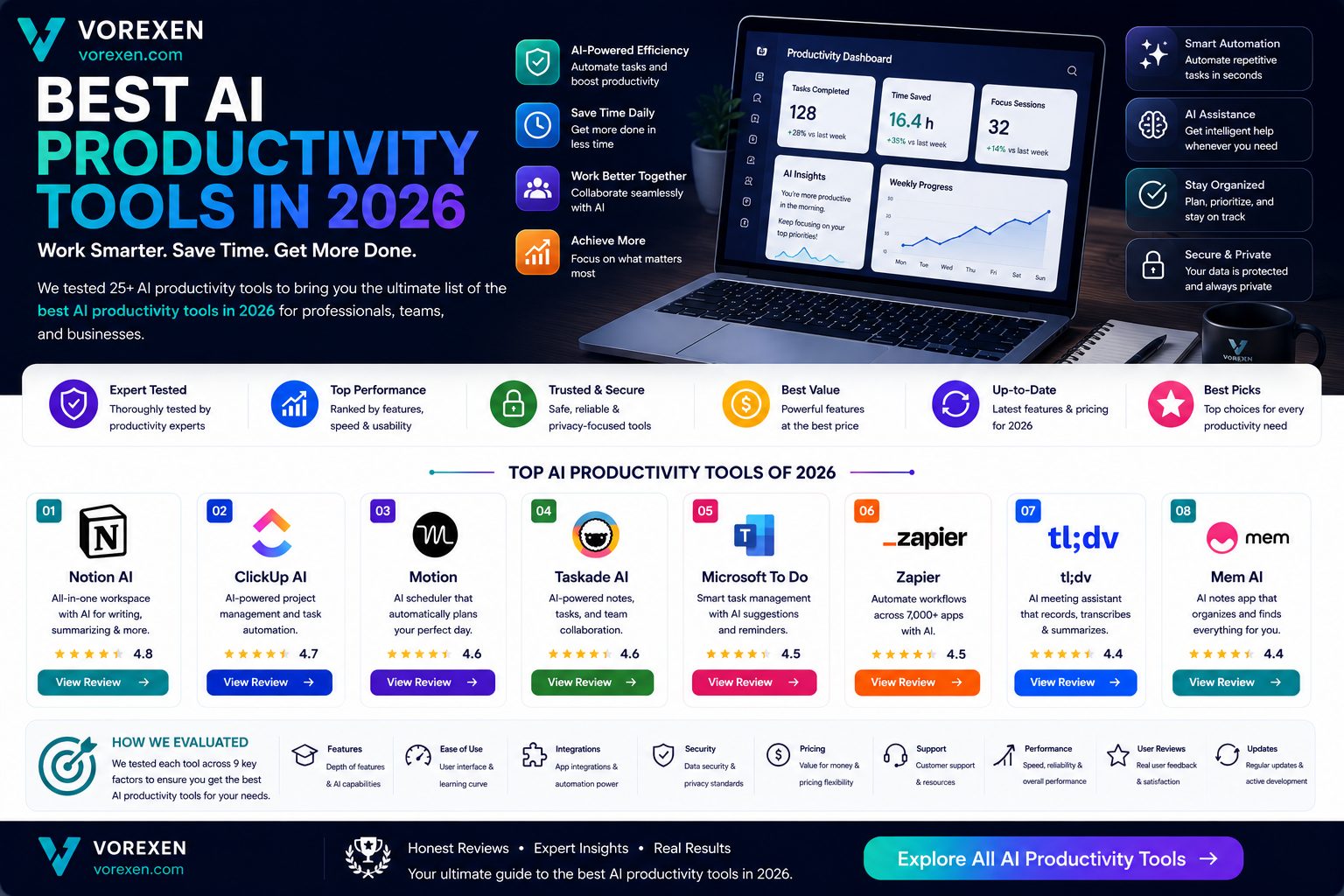
📈 Best AI Productivity Tools
Improve collaboration, note-taking, document management, meetings, and team productivity with AI.
- 🏆 Editor’s Pick: Notion AI
- Top Alternatives: Microsoft Copilot
- Best For: Teams
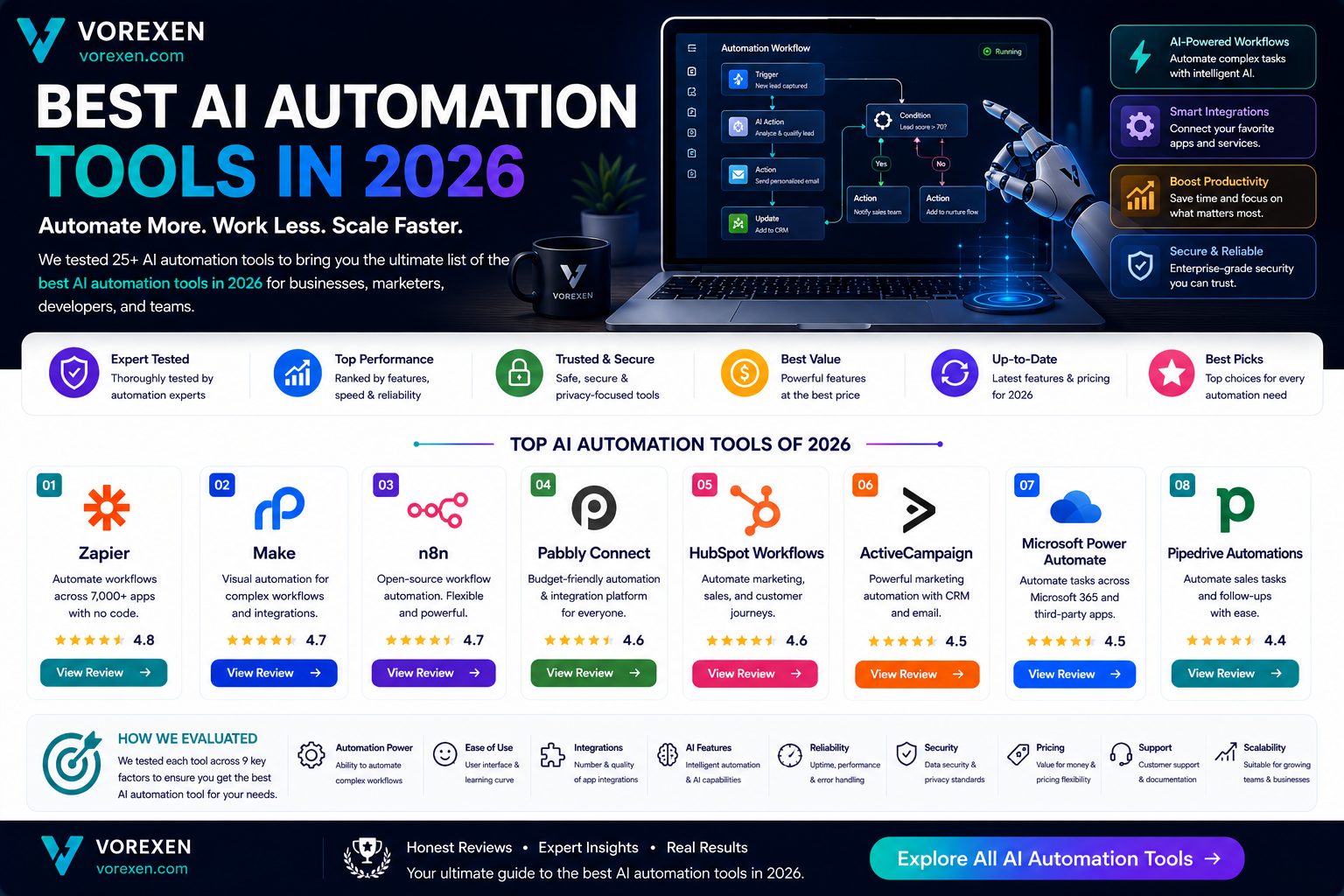
⚙️ Best AI Automation Tools
Automate repetitive workflows, connect apps, and build AI-powered business processes.
- 🏆 Editor’s Pick: Zapier AI
- Best For: Workflow Automation
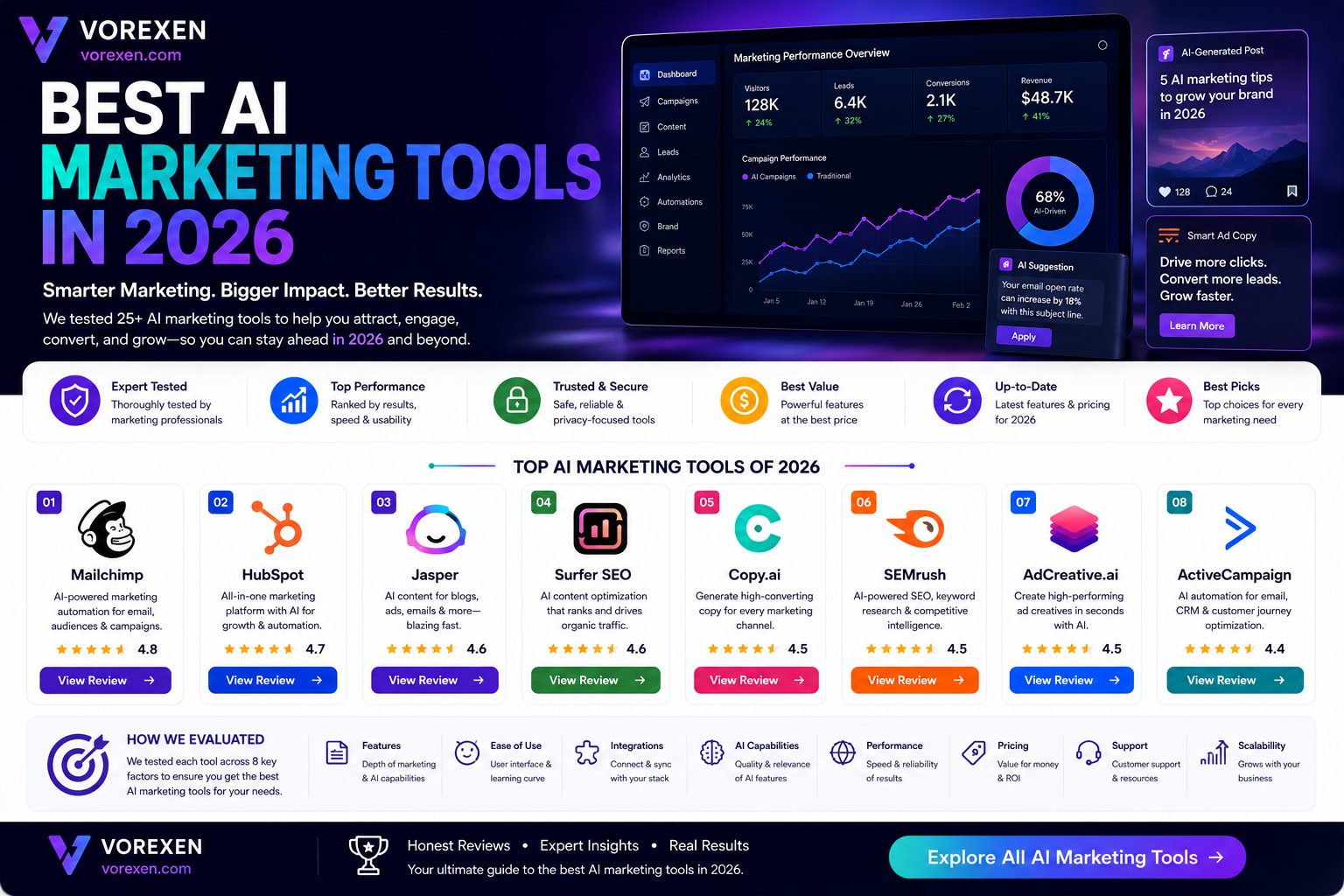
📢 Best AI Marketing Tools
Grow your business with AI-powered SEO, advertising, social media, analytics, and marketing automation.
- 🏆 Editor’s Pick: Jasper AI
- Best For: Digital Marketing
Ready to Discover the Best AI Tools?
Now that you’ve explored every major AI category, it’s time to dive into our detailed rankings. The next section reviews the highest-rated AI assistants, comparing their features, strengths, pricing, and ideal use cases to help you choose the right platform.
Continue to Part 3 →Best AI Assistants in 2026
AI assistants have become the foundation of modern productivity. Instead of using separate tools for writing, coding, brainstorming, research, translation, and data analysis, today’s leading AI assistants combine these capabilities into a single conversational interface.
After extensive testing, we found that four platforms consistently outperformed the competition in terms of intelligence, usability, reliability, ecosystem, and overall value.
ChatGPT
Overall Rating: ★★★★★ 4.9/5
ChatGPT remains the strongest all-around AI assistant available in 2026. Powered by OpenAI’s latest models, it combines natural conversation, advanced reasoning, coding assistance, image generation, document analysis, web browsing, and research capabilities into one platform.
Unlike many competitors that focus on only one area, ChatGPT performs consistently well across almost every workflow. Whether you’re writing articles, generating code, analyzing spreadsheets, planning projects, creating images, or learning new skills, it delivers reliable results with an intuitive user experience.
Best For
- Everyday AI assistance
- Professional writing
- Programming
- Research
- Business productivity
- Education
Highlights
- Excellent reasoning
- Image generation
- Deep Research
- Advanced Voice Mode
- Large ecosystem
- Custom GPTs
Pros
- Outstanding response quality across most tasks.
- Supports writing, coding, research, image generation, and data analysis.
- Excellent conversational interface.
- Strong ecosystem with GPTs and integrations.
- Free plan available.
- Frequent feature updates.
Cons
- Some advanced features require a paid subscription.
- Response quality can vary depending on the selected model.
- Occasional usage limits during peak demand.
Want a complete breakdown of ChatGPT’s features, pricing, models, comparisons, and real-world performance?
Read the Complete ChatGPT Review →Why ChatGPT Is Our Editor’s Choice
During our testing, ChatGPT consistently achieved the highest overall scores across the widest range of tasks. It delivered excellent results in long-form writing, software development, document summarization, brainstorming, multilingual conversations, image generation, and complex reasoning. Its combination of performance, ease of use, and continuous innovation makes it the most versatile AI platform for both individuals and businesses.
Although specialized tools may outperform ChatGPT in specific niches—for example, Cursor for AI coding or Midjourney for artistic image generation—no other platform matched its overall balance of capabilities during our evaluation.
Best AI Coding Tool in 2026
AI coding assistants have transformed modern software development by accelerating code generation, debugging, refactoring, documentation, and testing. After evaluating today’s leading developer tools, Cursor achieved the highest overall score thanks to its deep AI integration, excellent user experience, and outstanding coding performance.
Cursor
Overall Rating: ★★★★★ 4.9 / 5
Cursor is an AI-first code editor built for professional developers. Unlike traditional IDE extensions, it integrates artificial intelligence directly into the development workflow, making it possible to write, understand, edit, debug, and refactor code with natural language instructions.
Built on the familiar Visual Studio Code experience, Cursor supports multiple leading AI models while offering advanced context awareness across your project. This enables developers to work with entire codebases instead of isolated files, resulting in faster development and more accurate suggestions.
Key Features
💻 AI Code Generation
Generate complete functions, classes, APIs, and application components from natural language prompts.
🛠 Intelligent Debugging
Detect bugs, explain errors, and suggest practical fixes directly inside the editor.
📂 Project-Wide Context
Analyze multiple files simultaneously to generate context-aware code suggestions.
⚡ Smart Refactoring
Improve existing code while preserving functionality and coding standards.
📝 Documentation
Automatically generate comments, documentation, and code explanations.
🤖 Multiple AI Models
Supports several leading AI models, allowing developers to choose the best model for each task.
Pros and Cons
Pros
- Outstanding coding accuracy.
- Excellent project-wide context awareness.
- Fast code generation and editing.
- Powerful debugging capabilities.
- Familiar VS Code interface.
- Regular feature updates.
Cons
- Premium features require a paid subscription.
- Internet connection required for AI features.
- Advanced workflows may require some learning.
Best For
Software Engineers
Accelerate professional software development.
Full-Stack Developers
Build and maintain complex applications faster.
Development Teams
Improve productivity across collaborative projects.
Vorexen Rating
| Category | Score |
|---|---|
| AI Capabilities | 9.9 / 10 |
| Coding Accuracy | 9.8 / 10 |
| User Experience | 9.7 / 10 |
| Performance | 9.8 / 10 |
| Value for Money | 9.5 / 10 |
| Overall Rating | ★★★★★ 4.9 / 5 |
Why We Recommend Cursor
Cursor combines an intuitive coding experience with powerful AI assistance, making it our top recommendation for developers in 2026. Its ability to understand entire projects, generate high-quality code, explain complex logic, and streamline debugging gives it a clear advantage over many competing AI coding assistants.
Related Reviews
Next: GitHub Copilot
Continue reading to discover how GitHub Copilot compares with Cursor, including coding quality, integrations, pricing, strengths, and ideal use cases.
Continue →GitHub Copilot
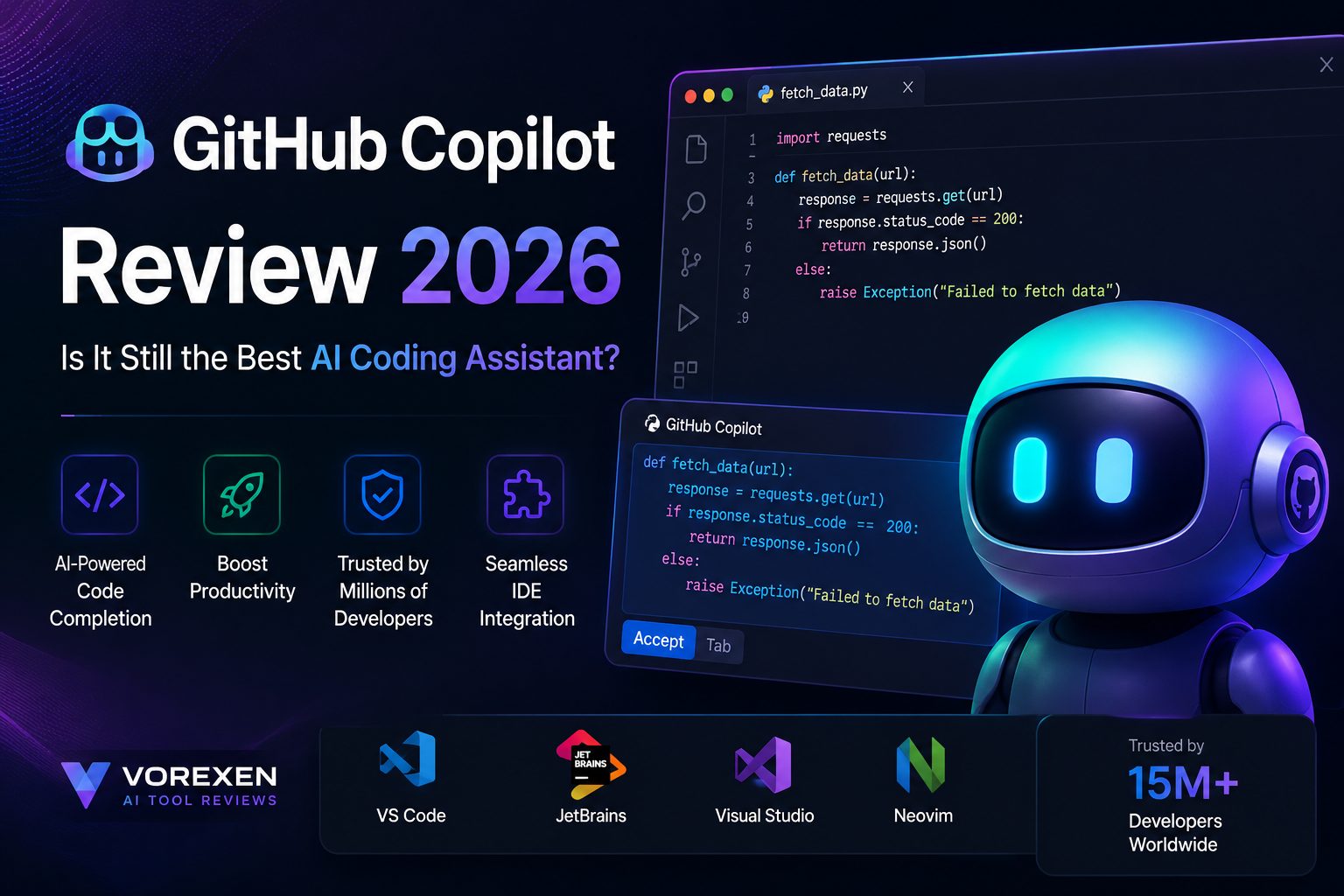
Overall Rating: ★★★★☆ 4.8 / 5
GitHub Copilot is an AI-powered coding assistant developed by GitHub. It integrates directly into popular development environments and helps developers generate code, complete functions, explain unfamiliar code, create unit tests, and accelerate everyday programming tasks.
Its tight integration with Visual Studio Code, Visual Studio, JetBrains IDEs, and GitHub makes Copilot an excellent choice for developers who want AI assistance without changing their existing workflow.
Key Features
⚡ Real-Time Code Completion
Predicts and generates code while you type, reducing repetitive work and speeding up development.
🧠 AI Chat
Ask programming questions, explain code, generate examples, and troubleshoot errors without leaving your IDE.
🧪 Test Generation
Create unit tests and boilerplate testing code for multiple programming languages.
🔄 Multi-Language Support
Supports popular languages including Python, JavaScript, TypeScript, Java, C#, Go, PHP, Rust, and many more.
🔗 GitHub Integration
Works seamlessly with repositories, pull requests, and GitHub workflows.
👥 Enterprise Features
Provides organization-wide controls, security options, and team collaboration capabilities.
Pros and Cons
Pros
- Excellent IDE integration.
- Fast and accurate code suggestions.
- Supports dozens of programming languages.
- Strong GitHub ecosystem.
- Easy setup for existing developers.
- Helpful AI chat experience.
Cons
- Project-wide context is less comprehensive than Cursor.
- Best experience requires a GitHub account.
- Premium subscription needed for full capabilities.
Best For
Professional Developers
Speed up everyday coding tasks with intelligent suggestions.
GitHub Users
Ideal for teams already using GitHub repositories and workflows.
Software Teams
Improve productivity while keeping existing development environments.
Vorexen Rating
| Category | Score |
|---|---|
| AI Capabilities | 9.6 / 10 |
| Coding Accuracy | 9.7 / 10 |
| User Experience | 9.6 / 10 |
| Performance | 9.7 / 10 |
| Value for Money | 9.3 / 10 |
| Overall Rating | ★★★★☆ 4.8 / 5 |
Cursor vs GitHub Copilot
Both tools significantly improve developer productivity, but they serve slightly different audiences. Cursor is built as an AI-first editor with deeper project awareness and advanced AI workflows, making it our top recommendation for most developers. GitHub Copilot, on the other hand, is ideal for developers who want powerful AI assistance while staying inside their existing IDE and GitHub ecosystem.
Related Reviews
Next: Best AI Image Generation Tool
Continue to discover why Midjourney remains one of the top AI image generators for artists, designers, marketers, and creative professionals.
Continue →Midjourney

Overall Rating: ★★★★★ 4.9 / 5
Midjourney is widely regarded as one of the most powerful AI image generators available today. It excels at producing artistic illustrations, cinematic scenes, concept art, product renders, architectural visualizations, branding assets, and highly realistic imagery from simple text prompts.
Its exceptional image quality, creative interpretation, and continuous model improvements have made it the preferred platform for designers, artists, marketers, game developers, and creative agencies.
Key Features
🎨 High-Quality Image Generation
Produces highly detailed illustrations and photorealistic artwork with impressive consistency.
✨ Artistic Styles
Supports fantasy, cinematic, anime, watercolor, realism, concept art, fashion, architecture, and many other creative styles.
📸 Photorealistic Rendering
Creates realistic portraits, products, interiors, landscapes, and commercial-quality visuals.
⚙ Advanced Prompt Controls
Offers parameters for aspect ratio, stylization, quality, image weighting, seeds, and other advanced customization options.
🔄 Upscaling & Variations
Generate higher-resolution images and quickly create alternative versions of your favorite outputs.
🚀 Continuous Model Improvements
Regular updates introduce better realism, faster generation, and improved prompt understanding.
Pros and Cons
Pros
- Industry-leading image quality.
- Excellent artistic creativity.
- Outstanding photorealistic rendering.
- Rich prompt customization.
- Large creative community.
- Frequent model improvements.
Cons
- Requires prompt engineering for best results.
- Subscription required for regular use.
- Learning advanced parameters takes time.
Best For
Designers
Generate concept art, branding assets, and marketing visuals.
Content Creators
Create unique images for blogs, YouTube, social media, and presentations.
Creative Professionals
Produce illustrations, product concepts, and commercial artwork.
Vorexen Rating
| Category | Score |
|---|---|
| Image Quality | 9.9 / 10 |
| Creativity | 10.0 / 10 |
| Ease of Use | 9.3 / 10 |
| Customization | 9.8 / 10 |
| Value | 9.5 / 10 |
| Overall Rating | ★★★★★ 4.9 / 5 |
Midjourney vs ChatGPT Image Generation
Midjourney remains our top recommendation for professional image creation thanks to its exceptional artistic quality and advanced creative controls. ChatGPT, however, offers a more integrated workflow by combining image generation with writing, coding, research, and conversational AI in a single platform. If your primary focus is visual creativity, Midjourney is the stronger choice. If you need an all-in-one AI assistant that can also generate high-quality images, ChatGPT provides greater overall versatility.
Related Reviews
Next: Runway
Continue to explore Runway, one of the leading AI platforms for video generation, editing, motion graphics, and professional creative production.
Continue →Runway
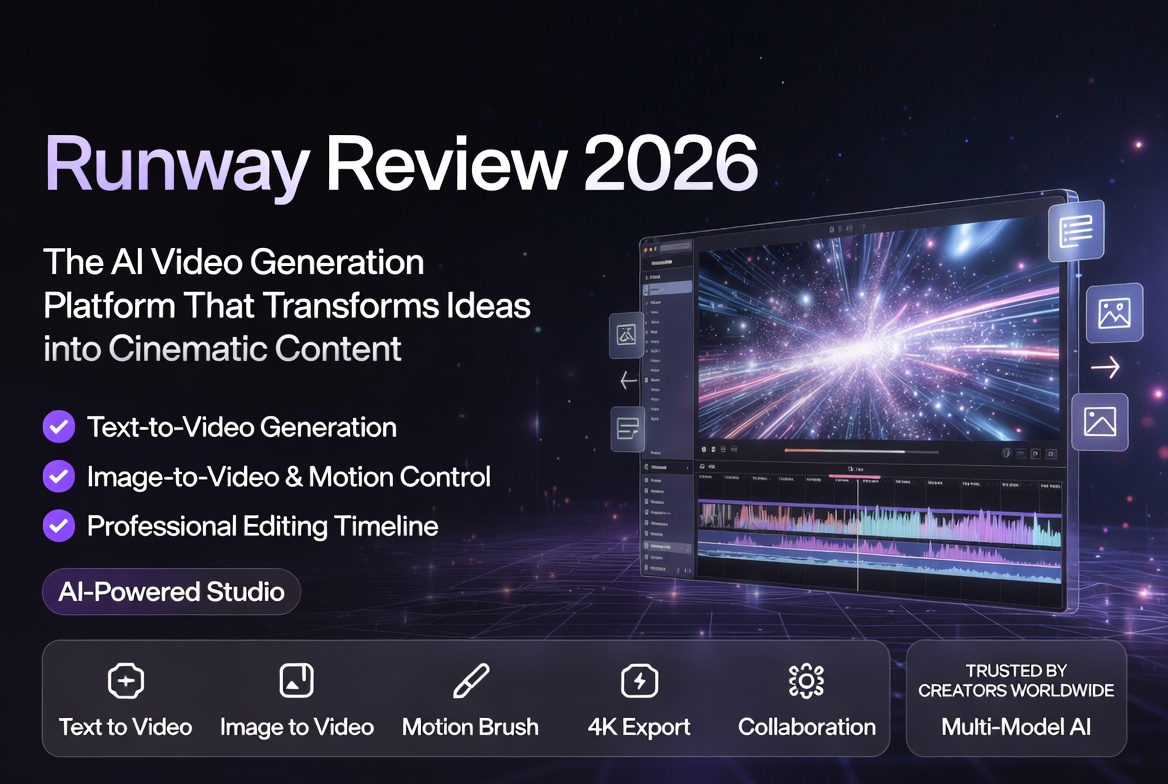
Overall Rating: ★★★★★ 4.8 / 5
Runway has become one of the leading AI video platforms by combining text-to-video generation, image animation, AI-powered editing, background removal, motion tracking, and cinematic visual effects in a single creative workspace.
Whether you’re creating YouTube videos, advertisements, social media content, product demonstrations, or cinematic short films, Runway dramatically reduces production time while maintaining impressive visual quality.
Key Features
🎥 Text-to-Video
Generate original video clips from natural language prompts.
🖼 Image-to-Video
Animate still images into realistic moving scenes.
✂ AI Video Editing
Remove backgrounds, erase objects, and edit scenes using AI.
🎬 Motion Effects
Create cinematic camera movements and dynamic animations.
👥 Collaboration
Cloud-based workflow for creative teams.
⚡ Fast Rendering
Generate high-quality videos significantly faster than traditional workflows.
Pros and Cons
Pros
- Excellent AI video generation quality.
- Professional editing tools.
- Fast cloud rendering.
- Simple interface.
- Frequent feature updates.
- Ideal for creators and marketers.
Cons
- Premium plans can become expensive.
- Long videos require additional credits.
- Rendering speed depends on server demand.
Best For
YouTubers
Create engaging AI-enhanced videos faster.
Marketing Teams
Produce promotional videos and advertisements.
Creative Studios
Accelerate professional video production workflows.
Vorexen Rating
| Category | Score |
|---|---|
| Video Quality | 9.8 / 10 |
| Ease of Use | 9.5 / 10 |
| Editing Features | 9.7 / 10 |
| Performance | 9.6 / 10 |
| Value | 9.4 / 10 |
| Overall Rating | ★★★★★ 4.8 / 5 |
AI Creative Tools Comparison
| Tool | Category | Best For | Overall Rating |
|---|---|---|---|
| Cursor | AI Coding | Professional Software Development | ★★★★★ 4.9 |
| GitHub Copilot | AI Coding | IDE Assistance | ★★★★☆ 4.8 |
| Midjourney | AI Image | Professional Artwork | ★★★★★ 4.9 |
| Runway | AI Video | Video Generation | ★★★★★ 4.8 |
Editor’s Recommendation
Creative professionals rarely rely on a single AI application. Our recommended workflow combines ChatGPT for planning and brainstorming, Cursor for software development, Midjourney for image creation, and Runway for AI-powered video production. Together, these tools cover nearly every stage of a modern creative workflow.
Related Reviews
Next: AI Productivity, Automation & Marketing
In the next section, we’ll explore the best AI tools for productivity, workflow automation, knowledge management, and digital marketing, including Notion AI, Zapier AI, and Jasper AI.
Continue →Best AI Productivity, Automation & Marketing Tools in 2026
While AI assistants handle general-purpose tasks, specialized productivity and automation platforms help teams organize information, automate repetitive workflows, manage projects, and scale business operations. During our evaluation, three platforms consistently stood out for reliability, integrations, and overall value.
Notion AI
Overall Rating: ★★★★☆ 4.8 / 5
Notion AI transforms traditional note-taking into an intelligent workspace. It can summarize documents, generate meeting notes, organize knowledge bases, draft content, and assist with project planning—all within the familiar Notion environment.
Best For
- Knowledge management
- Team collaboration
- Documentation
- Project planning
Strengths
- Excellent document organization
- Built-in AI assistant
- Collaborative workspace
- Simple learning curve
Zapier AI
Overall Rating: ★★★★☆ 4.7 / 5
Zapier AI enables users to automate workflows across thousands of applications without writing code. From email automation and CRM updates to AI-powered business processes, it dramatically reduces repetitive manual work.
Best For
- Business automation
- Workflow optimization
- No-code integrations
- Cross-platform connectivity
Jasper AI
Overall Rating: ★★★★☆ 4.8 / 5
Jasper AI remains one of the strongest AI platforms for digital marketing teams. It specializes in long-form content creation, advertising copy, SEO campaigns, email marketing, and brand-consistent messaging.
Ideal For
- SEO content
- Marketing teams
- Advertising
- Brand management
Highlights
- Brand Voice
- Campaign templates
- Marketing workflows
- Team collaboration
Comparison Matrix
| Tool | Category | Best For | Overall Rating |
|---|---|---|---|
| ChatGPT | AI Assistant | General AI | ★★★★★ 4.9 |
| Claude AI | AI Assistant | Long Documents | ★★★★★ 4.8 |
| Perplexity AI | Research | Search & Citations | ★★★★☆ 4.8 |
| Cursor | Coding | Software Development | ★★★★★ 4.9 |
| Midjourney | Image Generation | Creative Design | ★★★★★ 4.9 |
| Jasper AI | Writing | Marketing | ★★★★☆ 4.8 |
| Notion AI | Productivity | Workspace | ★★★★☆ 4.8 |
| Zapier AI | Automation | Workflow Automation | ★★★★☆ 4.7 |
Our Overall Recommendation
For most professionals, the ideal AI stack combines a general-purpose assistant with specialized tools. We recommend using ChatGPT as your primary AI assistant, then adding Cursor for software development, Jasper AI for marketing content, Midjourney for image creation, and Notion AI for knowledge management and productivity.
Next: How to Choose the Right AI Tool
You’ve now explored the highest-rated AI tools across every major category. In the next section, we’ll help you identify the best AI platform based on your goals, experience level, workflow, and budget.
Continue to Part 4 →How to Choose the Right AI Tool in 2026
With hundreds of AI platforms available today, choosing the right one can feel overwhelming. The best AI tool isn’t necessarily the one with the most features—it’s the one that best matches your workflow, goals, and budget.
Based on our testing, we recommend selecting an AI platform by first identifying the primary problem you want to solve. Once you’ve chosen your main use case, you can compare tools within that category instead of evaluating every AI platform on the market.
Choose Based on Your Primary Goal
| If You Want To… | Recommended Tool | Why We Recommend It |
|---|---|---|
| Use one AI for almost everything | ChatGPT | Excellent balance of writing, coding, research, reasoning, and creativity. |
| Write SEO content and marketing copy | Jasper AI | Built specifically for content marketing and business writing. |
| Develop software faster | Cursor | Industry-leading AI coding assistant with deep IDE integration. |
| Create professional AI images | Midjourney | Outstanding image quality and artistic control. |
| Research complex topics | Perplexity AI | Fast answers with citations and reliable web research. |
| Organize work and notes | Notion AI | Combines productivity, documentation, and AI assistance. |
Recommendations by User Type
👨🎓 Students
- ChatGPT
- Claude AI
- Perplexity AI
✍️ Writers & Bloggers
- Jasper AI
- Writesonic
- ChatGPT
💻 Developers
- Cursor
- GitHub Copilot
- ChatGPT
🎨 Designers & Creators
- Midjourney
- Runway
- ChatGPT Images
📈 Marketing Teams
- Jasper AI
- ChatGPT
- Notion AI
🏢 Businesses
- ChatGPT Team
- Microsoft Copilot
- Notion AI
Should You Use More Than One AI Tool?
In most cases, yes. While general-purpose AI assistants have become increasingly capable, specialized tools often deliver better results for specific tasks. Combining multiple AI platforms allows you to take advantage of each tool’s strengths while avoiding their limitations.
Vorexen Recommendation
If you’re new to AI, start with ChatGPT. As your needs become more specialized, expand your toolkit by adding dedicated platforms such as Cursor for coding, Jasper AI for content creation, Midjourney for image generation, and Notion AI for productivity.
Explore More AI Reviews
Next: Frequently Asked Questions
Still have questions? In the next section, we answer the most common questions about AI tools, pricing, safety, free plans, and choosing the right platform.
Continue to FAQ →Frequently Asked Questions
Below are the most common questions users ask when choosing the best AI tools. These answers are based on our independent testing and ongoing evaluation of today’s leading AI platforms.
What is the best AI tool in 2026?
Based on our testing, ChatGPT is the best overall AI tool in 2026 thanks to its combination of reasoning, writing, coding, image generation, voice capabilities, and extensive ecosystem. It offers the best balance of features for most users.
Which AI assistant is best for everyday use?
For most people, ChatGPT remains the top choice. If you frequently work with long documents or detailed analysis, Claude AI is another excellent option.
What is the best AI writing tool?
For professional marketing and long-form content, Jasper AI is our top recommendation. Other strong options include Writesonic, Copy.ai, and Rytr.
Which AI coding assistant is the best?
Cursor is currently our highest-rated AI coding assistant due to its deep IDE integration, code generation, debugging, and productivity features. GitHub Copilot is another strong alternative.
Which AI tool is best for image generation?
For artistic image creation, Midjourney remains one of the strongest choices. If you prefer an integrated workflow, ChatGPT’s image generation capabilities are also an excellent option.
What is the best free AI tool?
The free version of ChatGPT provides exceptional value for most users. Other platforms also offer free plans, but available features and usage limits vary.
Can one AI tool replace all others?
Not completely. General-purpose assistants can handle many tasks, but specialized tools often deliver better results for coding, image generation, marketing, automation, or research. Many professionals use a combination of AI platforms.
Are AI tools safe to use?
Most major AI platforms provide security features and privacy controls. However, you should avoid uploading confidential or sensitive information unless you understand the provider’s data handling and privacy policies.
How often are Vorexen rankings updated?
We review our rankings whenever major AI models, pricing, features, or significant platform updates are released, helping keep our recommendations current and relevant.
Which AI tool is best for research?
Perplexity AI is our preferred research platform because it combines web search with source citations, making it useful for fact-finding and information discovery.
Should beginners pay for AI tools?
Not necessarily. We recommend starting with free plans to learn each platform’s strengths. Upgrade only when premium features provide clear value for your workflow.
How do I choose the right AI tool?
Start by identifying your primary use case. Choose a general AI assistant for everyday work, then add specialized tools for writing, coding, design, research, or productivity as your needs grow.
Related AI Guides
Next: Final Verdict
Now that we’ve answered the most common questions, it’s time to summarize our findings and reveal our final recommendations for the best AI tools in 2026.
Continue to Final Verdict →Final Verdict: The Best AI Tools in 2026
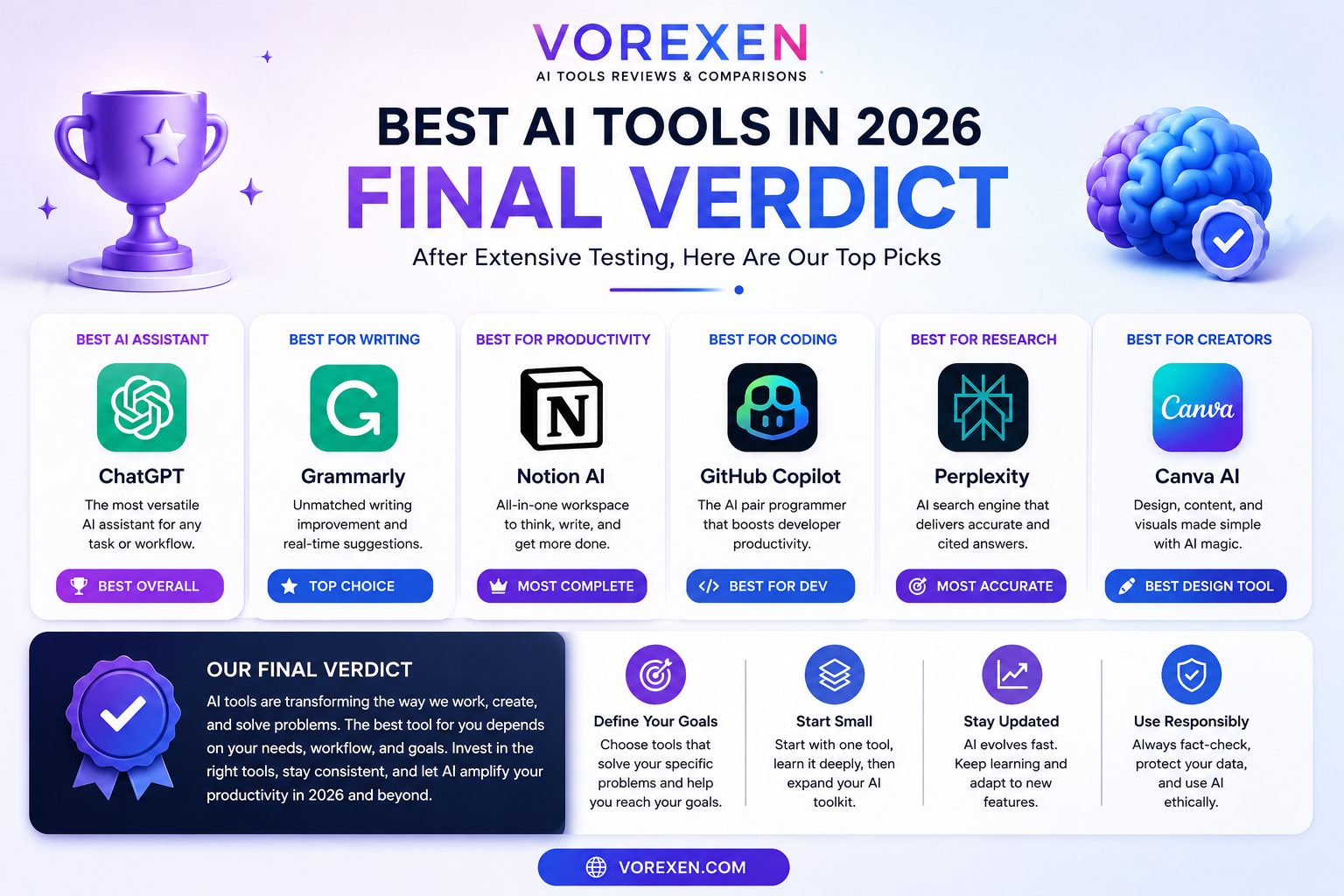
Artificial intelligence has matured into an essential technology for professionals, businesses, students, developers, creators, and researchers. While dozens of excellent AI platforms are available today, only a handful consistently deliver outstanding results across performance, usability, innovation, and long-term value.
After applying our standardized evaluation framework, we identified clear winners in every major AI category. Rather than recommending a single platform for everyone, we encourage users to build an AI toolkit that matches their specific workflow.
🏆 Vorexen Editor’s Choice Awards
| Category | Winner | Why It Won |
|---|---|---|
| Best Overall AI Tool | ChatGPT | Best balance of intelligence, versatility, ecosystem, and value. |
| Best AI Assistant | ChatGPT | Excellent for writing, coding, research, and daily productivity. |
| Best AI Writing Tool | Jasper AI | Outstanding marketing and SEO content generation. |
| Best AI Coding Tool | Cursor | Industry-leading AI-assisted software development. |
| Best AI Research Tool | Perplexity AI | Fast research with reliable citations. |
| Best AI Productivity Tool | Notion AI | Excellent workspace and knowledge management. |
Recommended AI Stack
This combination covers nearly every professional workflow, including writing, software development, research, collaboration, automation, and business productivity.
Key Takeaways
- Choose tools based on your workflow—not popularity alone.
- General AI assistants are ideal starting points for most users.
- Specialized platforms often outperform general AI in niche tasks.
- Combining two or three complementary tools usually delivers the best results.
- Review AI subscriptions regularly as models and pricing continue to evolve.
Continue Exploring AI with Vorexen
Want a deeper look at a specific platform? Explore our comprehensive reviews, feature comparisons, pricing guides, and hands-on testing to find the AI software that best fits your needs.
Article Information
| Article | Best AI Tools in 2026 |
|---|---|
| Category | AI Software Reviews |
| Content Type | Buying Guide & Rankings |
| Last Updated | July 2026 |
| Reviewed By | Vorexen Editorial Team |
| Review Method | Independent Hands-on Testing |
Affiliate Disclosure
Some links on this page may be affiliate links. If you purchase a product through these links, Vorexen may earn a commission at no additional cost to you.
Affiliate partnerships never influence our rankings, editorial opinions, or review methodology. Every recommendation is based on our independent evaluation process and standardized testing framework.
Explore More AI Resources
Stay Updated
The AI industry changes faster than almost any other technology sector. New models, pricing updates, integrations, and capabilities appear throughout the year.
Bookmark this guide and revisit it regularly to stay informed about the latest AI tools, rankings, and expert recommendations from the Vorexen editorial team.
Frequently Asked Questions (FAQ)
What are the best AI tools in 2026?
The best AI tools in 2026 depend on your specific needs. Popular categories include AI writing assistants, AI coding tools, AI chatbots, image generators, video creation platforms, productivity tools, and AI automation solutions.
Which AI tool is the best overall in 2026?
There is no single best AI tool for everyone. Tools like ChatGPT, Claude, Gemini, GitHub Copilot, and other specialized AI platforms provide different advantages for writing, research, coding, business, and productivity.
What are the best AI writing tools in 2026?
Some of the leading AI writing tools in 2026 include Jasper AI, Writesonic, Copy.ai, Rytr, and Frase. These platforms help users create content, optimize SEO, and improve writing workflows.
What are the best AI coding tools in 2026?
The best AI coding tools include GitHub Copilot, Cursor AI, Tabnine, and other developer assistants that help with code completion, debugging, software development, and improving developer productivity.
Are AI tools free to use?
Many AI tools offer free plans with limited features. Premium versions usually provide higher usage limits, advanced AI models, integrations, and additional features for professional and business users.
How do I choose the right AI tool?
Choose an AI tool based on your goals, workflow, budget, privacy requirements, and required features. Writers, developers, marketers, researchers, and businesses may need different AI solutions.
Are AI tools replacing human workers?
AI tools are designed to support human creativity and productivity. They automate repetitive tasks and provide assistance, while human expertise, decision-making, and creativity remain important.
What AI tools should businesses use in 2026?
Businesses can use AI tools for marketing automation, customer support, content creation, data analysis, workflow automation, meetings, and improving overall productivity.
Thank You for Reading
Thank you for using Vorexen as your trusted resource for AI software reviews and comparisons. We hope this guide helps you choose the right AI tools with confidence.
See you in our next review!